




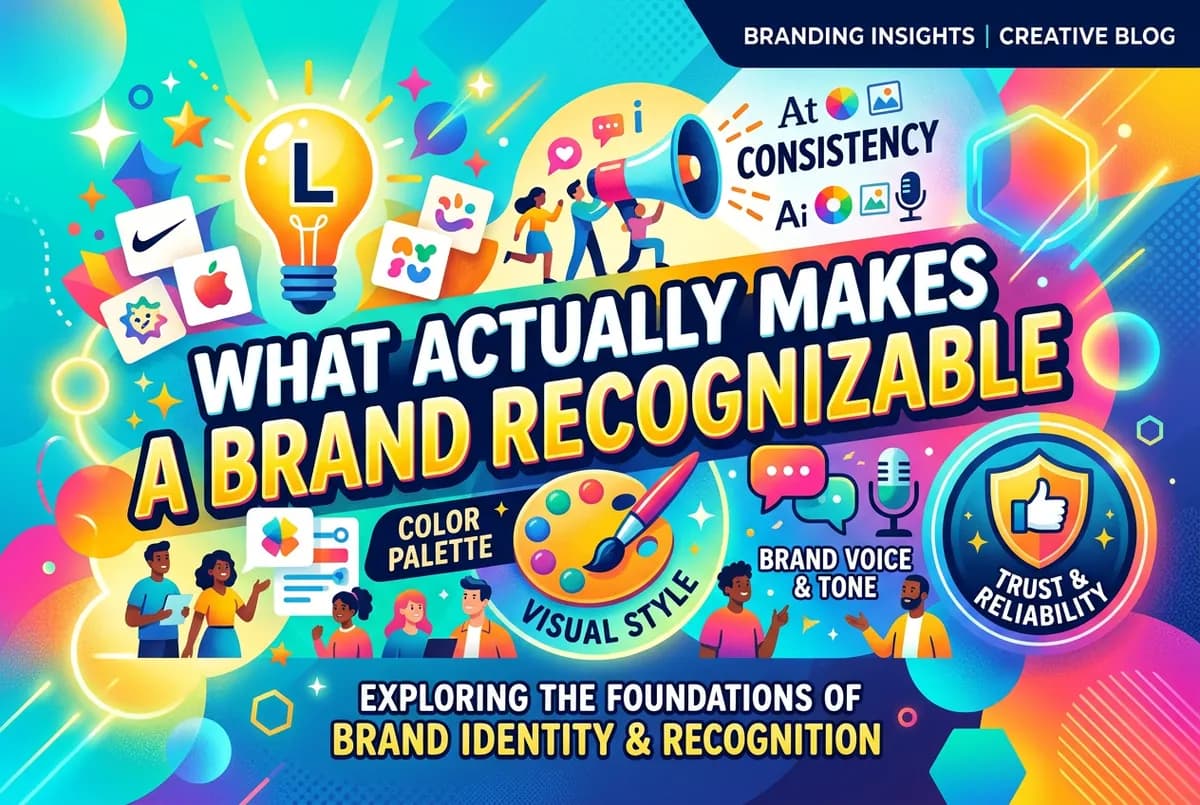
Brand recognition is not a design problem. It is a consistency problem.
I have worked on enough identities to see the pattern clearly. The brands that become familiar quickly are not the ones with the most creative logos. They are the ones that make the same visual decisions, everywhere, without exception, for long enough that it sticks.
What consistency actually means
Consistency does not mean putting your logo on everything. It means using your color at the right opacity, with the right typeface, in the right proportions, in photography of a consistent mood, in a spatial rhythm that feels like one hand made all of it.
Most brands are consistent in isolation — every individual piece looks fine. The problem is that the pieces do not feel like they came from the same place. The pitch deck looks corporate. The website looks startup-ish. The Instagram looks like someone's personal aesthetic project. Each one is passable. None of them are memorable, because each one is a slightly different signal.
The shortcut that does not work
"We have a brand guidelines document" does not mean the brand is applied consistently. Guidelines are a starting point. What matters is whether the people producing materials actually use them, and whether the system is clear enough to follow without constant interpretation.
Thick guidelines documents that live in a shared drive and are never read do not produce consistent brands. Simple rules that everyone understands and that travel well into the hands of developers, marketers, and contractors do.
What the most recognizable brands do differently
They pick fewer things and stick to them harder. One brand color, used everywhere, is more powerful than four brand colors used interchangeably. One typeface in two weights does more for recognition than five fonts used loosely.
They treat constraints as design decisions, not restrictions. Saying "we only use these three colors and this font" is a creative act. It is the creative act that builds recognition over time.
They maintain the system under pressure. Someone will regularly want to make an exception — this one time, for this campaign, the off-brand choice seems like it would work better. The brands with strong recognition push back on this consistently. Not because they are precious about the guidelines, but because recognition is built through repetition, and each exception is a cost.
How to think about recognition as a startup
You are not trying to be immediately famous. You are trying to be immediately familiar to the people who have encountered you before. When someone sees your Instagram after being on your website, it should feel like the same company. When they get your packaging in the mail, same company.
That narrow recognition — among your actual audience — is where brand identity does its work. The broader awareness comes later, and it is built on top of this.
The clearest signal that a brand has this figured out: you recognize it before you see the logo.